

While the majority of local spiders are non-aggressive and even beneficial, identifying them is the first step toward keeping your living environment comfortable. This guide covers the most common spider species found in Southern Ontario homes and yards, categorized by appearance, and provides actionable bite safety and prevention strategies.
Brown, Tan, or Mottled Grey Ontario Spiders
These spiders rely on heavy camouflage to blend into tree bark, leaf litter, soils, or dark indoor corners.
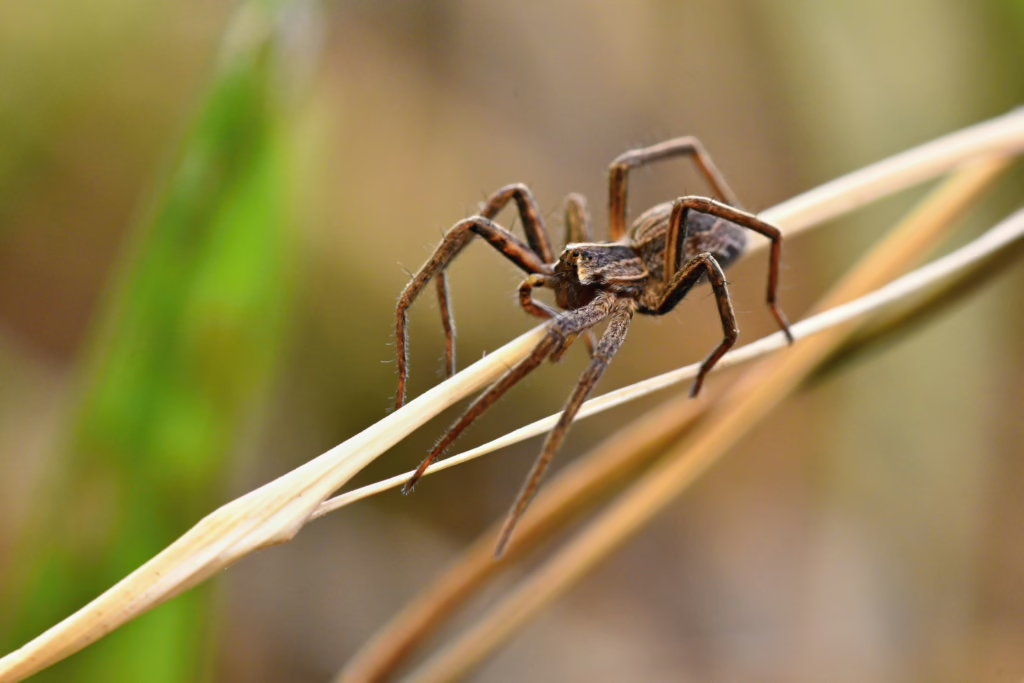
1. Wolf Spiders (Lycosidae Family)
Wolf spiders are large, agile ground hunters that roam on foot rather than building webs to capture prey. Because of their hairy bodies and impressive speed, encountering one inside a basement or garage can be intimidating, but they play a crucial role in reducing other household pests.
- Where to find them: Ground floors, basements, lawns, under mulch or woodpiles.
- What they look like: Large, robust, hairy, and patterned with dark brown, grey, and black lines. Their eye arrangement is distinct: four small bottom eyes, two larger middle eyes, and a pair of medium side eyes.
- Positives: Absolute powerhouses of insect control. Because they sprint and hunt on foot rather than relying on webs, they actively stalk and eliminate large ground pests like crickets, earwigs, and beetles.
- Concerns: Their sheer size, speed, and hairy appearance cause significant alarm when they startle you indoors during autumn temperature drops. If trapped or squeezed against the skin, they can deliver a painful bite, but it results in minor, localized swelling at worst.
For a complete look at wolf spider behavior in our region, read our detailed guide: The Wolf Spider: Your Essex County Guide.
2. Dark Fishing Spider (Dolomedes tenebrosus)
Holding the title as Ontario’s largest native spider, the dark fishing spider is an impressive outdoor species often found near water, wooded yards, and structures. Despite its massive leg span, it is a shy giant that works hard to keep large insects away from your property perimeter.
- Where to find them: Tree trunks, shady garden sheds, shoreline properties, or damp basements.
- What they look like: Ontario’s largest native spider. They are heavily mottled in bands of grey, dark brown, and black, perfectly matching tree bark.
- Positives: They act as an incredible natural defense line for your home’s exterior, keeping large wood-boring insects, silverfish, and moths away from the perimeter.
- Concerns: They look intimidating due to a leg span that can easily cover the palm of an adult’s hand. However, they are exceedingly shy and prefer to flee rather than confront humans.
3. Grass / Funnel-Web Spiders (Agelenidae Family)
Grass spiders are rapid runners that build distinctive, flat sheet webs across lawns, low shrubbery, and garden steps. Each web features a funnel-shaped retreat at the back where the spider waits patiently to pounce on passing lawn pests.
- Where to find them: Low bushes, steps, and flat, sheet-like webs blanketing lawns.
- What they look like: Slender brown spiders with dark stripes on the head and long, prominent spinnerets pointing out the tail end.
- Positives: They intercept thousands of lawn-destroying pests like sod webworms, flea beetles, and aphids before they can ruin your turf.
- Concerns: They are ultra-fast runners, which can be unsettling if they slip past a doorway.
4. Common House Spider (Parasteatoda tepidariorum)
The common house spider is the culprit behind most cobwebs found in ceiling corners, window frames, and basements. These quiet, harmless spiders prefer to stay tucked away in their webs, feeding on flying insects that wander indoors.
- Where to find them: Upper ceiling corners, window frames, and basements.
- What they look like: Small to medium, dull brown or tan with a spotted, rounded, bulbous abdomen. Comb-like hairs are present on their hind legs.
- Positives: The ultimate quiet indoor roommate. They stay entirely confined to their webs and catch pesky indoor fliers like houseflies, mosquitoes, and fruit flies.
- Concerns: They create classic “cobwebs” that accumulate dust, look messy over time, and drop tiny flecks of debris onto baseboards.
If you are noticing a high concentration of dark-colored spiders spinning webs along your baseboards or ceilings.
Yellow, Orange, or Cream-Colored Ontario Spiders
These spiders stand out with lighter hues, often utilizing yellow or cream to either blend into backyard flowers or warn predators away.
5. Yellow Garden Spider (Argiope aurantia)
Renowned for its vibrant coloration and massive circular webs, the yellow garden spider is a striking highlight of late-summer backyards. They weave a bold white zigzag silk pattern into the center of their webs to stabilize the structure and intercept large garden insects.
- Where to find them: Large geometric webs in sunny backyard gardens.
- What they look like: Strikingly large with a bold, velvet-black abdomen heavily patterned with bright, vibrant yellow patches.
- Positives: They trap giant flying pests like grasshoppers, wasps, and stinkbugs that standard spiders can’t handle.
- Concerns: Their massive size can scare homeowners, and they love to spin enormous webs across high-traffic walkways.
6. Yellow Sac Spider (Cheiracanthium mildei)
Yellow sac spiders are small, pale nocturnal prowlers that wander along walls, moldings, and ceilings at night rather than sitting in a web. Because they wander into clothing or bedding, they account for a noticeable portion of minor indoor spider bites in Ontario.
- Where to find them: Indoors walking on walls at night, or hidden in small white silk sacs in window trim corners.
- What they look like: Small, smooth, and uniformly pale yellow, light tan, or slightly greenish-white. Somewhat translucent.
- Positives: Agile nighttime prowlers that keep interiors clear of bedbugs, silverfish, and small flies.
- Concerns: This is the main indoor nuisance spider in Ontario. Because they wander, they can get trapped in clothes or bedding. Their bite is notably painful (comparable to a wasp sting) and can cause localized swelling.
7. Cross Orbweaver (Araneus diadematus)
Instantly recognizable by the white cross pattern on its swollen abdomen, the cross orbweaver is a common sight across Southern Ontario during late summer and autumn. They build large, wheel-shaped webs near outdoor lights, doorways, and gardens.
- Where to find them: Large circular webs stretched across porch lights, doorways, and garden paths.
- What they look like: Swollen, bulbous abdomen ranging from orange-brown to yellow-brown, marked with a distinct white cross pattern on its back.
- Positives: They set up webs near outdoor lighting, single-handedly wiping out swarms of moths and mosquitoes.
- Concerns: Highly prolific web builders in autumn, resulting in accidental contact with sticky silk lines around doorways.
Jet Black or Dark Chocolate-Brown Ontario Spiders
These species feature deep, dark glossy or velvety bodies, often with distinct geometric or colorful markings.
8. False Black Widow (Steatoda grossa)
The false black widow shares a similar dark, shiny, bulbous shape with true black widows, making it a frequent source of mistaken identity and alarm. However, it completely lacks bright red markings and poses no serious health hazard to humans.
- Where to find them: Behind crawlspaces, water heaters, and dark basement corners.
- What they look like: Glossy, dark chocolate-brown or purplish-black bulbous body. Completely lacks any red markings.
- Positives: They occupy deep, dark voids where true pests hide, keeping hidden populations of wood-boring insects down.
- Concerns: Frequently misidentified as dangerous black widows, causing unnecessary panic. Bites cause a dull ache for a couple of hours but have no medical severity.
9. Black House Spider (Badumna insignis)
Preferring the exterior crevices of homes, black house spiders construct messy, funnel-shaped webs around window frames, brickwork, and porch lights. Their dark, scruffy appearance makes them an effective outer barrier against night-flying pests.
- Where to find them: Corners of exterior window frames, brick crevices, and doorways.
- What they look like: Dark brown to charcoal black with a slightly scruffy appearance, smaller and less reflective than a Black Widow.
- Positives: Effective perimeter predators that capture flying insects drawn to outdoor lights.
- Concerns: They build thick, funnel-like web structures that collect dust and make house exteriors look unkempt.
Read our full species profile: The Black House Spider: Identification, Habits, and Control.
10. Black Lace Weaver (Amaurobius ferox)
Black lace weavers are stocky, dark spiders that thrive in damp, undisturbed subterranean environments like old stone foundations and crawl spaces. Their dense, lace-like web structures help keep moisture-seeking pests under control beneath the home.
- Where to find them: Damp, cool basements, crawl spaces, and under moist outdoor logs.
- What they look like: Stocky, dark plum to jet-black body, often featuring a pale marking on the abdomen resembling a skull.
- Positives: Helps control moisture-loving pests around foundations.
- Concerns: Their stocky build and large fangs can be alarming in older foundations, though they are not a health threat.
11. Triangulate Cobweb Spider (Steatoda triangulosa)
This small cobweb spider is decorated with a distinct chain of pale triangles across its dark back. Often tucked away along baseboards and behind toilets, it acts as an aggressive indoor exterminator targeting crawling pests like ants and carpet beetle larvae.
- Where to find them: Tangled baseboard webs, behind toilets, and basement window wells.
- What they look like: Small, dark brownish-purple body decorated with a visible geometric chain of pale, cream-colored triangles down its back.
- Positives: An incredible indoor asset known to aggressively hunt down and consume ants, ticks, and carpet beetle larvae.
- Concerns: They build messy, tangled tripwire webs along floorboards.
12. Northern Black Widow (Latrodectus variolus)
As Ontario’s only native spider with medically significant venom, the Northern Black Widow commands respect. Thankfully, it is an exceptionally reclusive species that stays tucked away in deep, undisturbed outdoor locations like woodpiles and outbuildings, making indoor encounters virtually nonexistent.
- Where to find them: Deep, undisturbed woodpiles, old rural outbuildings, or stone walls outdoors.
- What they look like: Jet black and hyper-glossy with a distinct bright red hourglass (often split into two spots) on the underside.
- Positives: They eat a large volume of beetles and outdoor pests.
- Concerns: This is Ontario’s only native spider with medically significant venom. While extremely timid, a bite delivers neurotoxic venom requiring medical evaluation. They are practically never found inside active living areas.
For more details on Black Widow activity in Ontario, read Are There Black Widows in Ontario? What Local Homeowners Need to Know.
Strikingly Multi-Colored or Patterned Ontario Spiders
These spiders possess unique, bold color combinations or structures that set them apart instantly.
13. Bold Jumping Spider (Phidippus audax)
With its fuzzy black body, bright abdominal spot, and metallic green or blue fangs, the bold jumping spider is a favorite among gardeners. These inquisitive, active daytime hunters rely on keen vision rather than webs to stalk and pounce on flies and insects.
- Where to find them: Sunlit exterior walls, decks, window screens, and indoor sill areas.
- What they look like: Compact, fuzzy black body with a distinct bright white or orange triangular spot on its back and iridescent green or blue fangs.
- Positives: Daytime hunters with incredible eyesight that actively stalk flies and small pests without building catching webs.
- Concerns: Their sudden jumping movements can startle homeowners when they wander indoors through open windows or doors.
14. Woodlouse Spider (Dysdera crocata)
Featuring a smooth grey abdomen contrasted against a bright reddish-orange body and massive forward-facing fangs, the woodlouse spider looks like an exotic visitor. In reality, it is a specialized predator designed specifically to punch through the tough armors of pillbugs and sowbugs.
- Where to find them: Under garden bricks, porch steps, or damp basement floors.
- What they look like: Smooth cream-grey abdomen, dark reddish-orange head and legs, and massive forward-pointing jaws.
- Positives: Highly specialized exterminator that targets woodlice (sowbugs/pillbugs) almost exclusively.
- Concerns: Terrifying fangs can easily break human skin if handled, resulting in a sharp bite that pinches like a bee sting.
15. Broad-Faced Sac Spider (Trachelas tranquillus)
The broad-faced sac spider is easily spotted thanks to its cherry-red head and front legs paired with a pale body. As autumn approaches, these wandering hunters frequently march indoors across baseboards and ceilings searching for warm shelter and fallen prey.
- Where to find them: Moves indoors during autumn; seen on baseboards, floors, and ceilings.
- What they look like: Smooth pale grey-tan abdomen paired with a deep dark-cherry red head and front legs.
- Positives: Hunts down and scavenges dead insects and small pests around home perimeters.
- Concerns: Moderate bite strength if trapped inside clothing or shoes.
16. Eastern Parson Spider (Herpyllus ecclesiasticus)
Named for the silvery cravat-like white stripe down its velvety dark back, the eastern parson spider is a fast-moving nocturnal hunter. It roams carpets and baseboards at night, eliminating crawling pests without leaving behind messy webs.
- Where to find them: Fast ground-hunter sprinting across carpets and walls at night.
- What they look like: Velvety jet-black body split down the middle by a bold, scalloped, bright silvery-white stripe on its back.
- Positives: Hunt on foot to clear out silverfish, small spiders, and crawling insects without building messy webs.
- Concerns: Sudden, blistering speed across open floors can be startling.
17. Zebra Jumper (Salticus scenicus)
The zebra jumper is a charming, tiny spider adorned with bold black-and-white stripes across its fuzzy body. Often seen basking on sunny fences, walls, and sills, these curious little hunters pounce on annoying houseflies with remarkable precision.
- Where to find them: Sunlit window sills, brick walls, and backyard fences.
- What they look like: Tiny, fuzzy, and compact with distinct black-and-white zebra stripes and giant front eyes.
- Positives: Highly beneficial, entertaining, and possess incredible eyesight to pounce on flies and gnats.
- Concerns: None. Universally harmless, non-web building, and completely non-aggressive.
Spider Bite Myths: Are Southern Ontario Spiders Dangerous?
One of the biggest concerns for homeowners is whether local spiders pose a serious venom risk. For a deep dive into local species safety, read our full article on Identifying “Poisonous” Spiders in Ontario.
- Brown Recluse Spiders: Despite widespread urban legends, brown recluse spiders are not native to Ontario and do not have established breeding populations in our climate.
- Northern Black Widow: While native, they are extremely rare, shy, reclusive, and restricted to outdoor woodpiles or outbuildings. Learn more in our guide on Black Widows in Ontario.
- Spider Bite Reality: Nearly all spider species produce venom to subdue insect prey, but the vast majority lack mouthparts strong enough to pierce human skin or venom potent enough to cause medical complications.
Spider Prevention: A Proactive Homeowner Strategy
Spiders migrate indoors for three main reasons: food, shelter, and moisture. By systematically addressing these attractants, you can significantly lower spider activity in your home.
To understand the core reasons spiders target your house, explore our guide on What Attracts Spiders in Your House?.
- Manage Outdoor Lighting: Exterior lights draw flies, moths, and mosquitoes, creating feeding grounds for web-weavers. Switch to yellow insect-resistant LED bulbs.
- Seal Entry Points: Use silicone caulk and expanding foam around foundation walls, window frames, and door sweeps.
- Control Humidity: Dehumidify basements and crawl spaces to eliminate moisture conditions preferred by cellar spiders.
- Clear Perimeter Vegetation: Keep grass trimmed, pull back garden mulch 12 inches from foundations, and store firewood off the ground.
- Regular Indoor Cleaning: Vacuum behind furniture, sweep down high corners, and eliminate cardboard clutter.
When Do Spiders Become a Problem?
While a few spiders are great for natural pest control, they can quickly become an issue if populations multiply rapidly indoors (signaling an underlying insect infestation), if you are dealing with biting nuisance species like Yellow Sac spiders, or if webs compromise your home’s curb appeal.
The Spider Guys specialize in exterior barrier sprays and comprehensive pest control services designed to stop spiders and their insect food sources before they breach your home’s exterior envelope.
If spider webs, high populations, or seasonal migrations are affecting your home in Windsor, Tecumseh, LaSalle, Essex, Lakeshore, or Essex County, contact us today or call (226) 641-0003 to request a custom quote and restore peace of mind to your space!